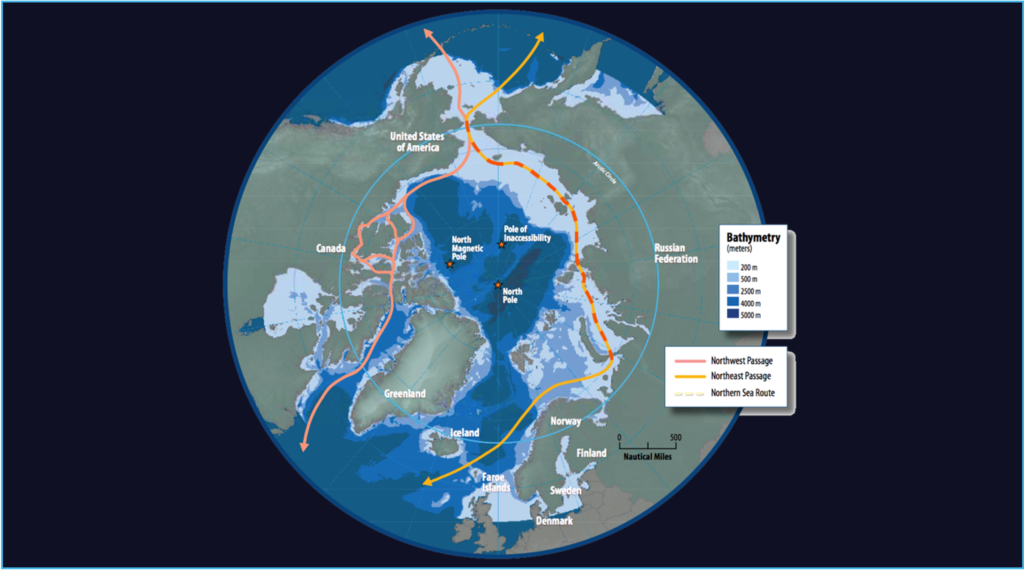
The China-Russia Arctic Cooperation now includes aiding Chinese cargo through the North Sea Route.
Russia offers shipping access in exchange for Chinese military technology.
400 Arctic oil and gas fields are at the centre of strategic transport and military interests.
China aims to reduce its carbon footprint and secure energy through the Northern Sea Route.
Up to 8% of global trade may reroute from the Suez Canal to this Arctic passage.
Implications: This partnership reshapes Arctic geopolitics and global trade dynamics.
Considerations
How will the Russia-China Arctic partnership affect their power dynamics and China’s geopolitical influence? Could China’s focus on Taiwan escalate without direct conflict?
What are the global repercussions, particularly for the Middle East’s strategic position and Egypt’s economy with the Suez Canal’s relevance at stake?
What are the environmental impacts of increased NSR traffic? Can it be carbon-neutral as China claims?
How does the NSR shift affect global supply chains and the West’s reliance on China? Could the Nordics move towards the China-Russia orbit?
Economic Levers
One: Economic:
Should NATO escalate sanctions on Russian and Chinese leaders, restrict trade under their flags in the Arctic, and deny them Western tech to curb Arctic expansion?
Two: Defence and security Lever:
Should NATO members divide their efforts equally between the Russia-Ukraine and Indo-Pacific theatres of operation?
Three: Diplomatic Lever:
Should NATO expand its climate security reach to include trade operations through the Arctic Circle?